
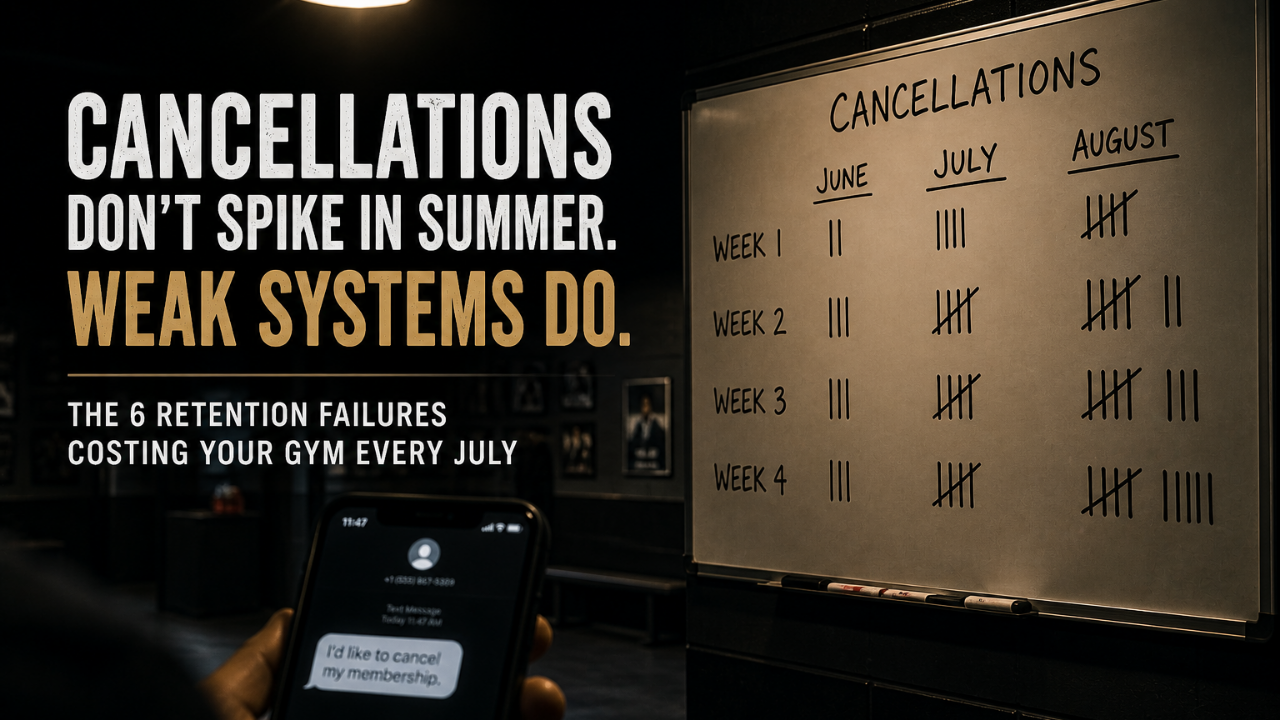
Why Cancellations Spike When Your Systems Are Weak (It's Not the Members)
Jul 13, 2026Cancellations Are Not the Problem. They're the Symptom.
Every gym owner who has been through a summer dip has a theory about why it happened.
"People travel more."
"Kids are out of school and it messes up schedules."
"It's hot and people get lazy."
"July is just slow."
Some of that is true. Seasonal disruption is real. Routines do break in summer.
But here's the part that gets missed every time: the gyms that don't spike in cancellations are not in a different climate. They're not serving a more committed demographic. They don't have members with better discipline.
They have better systems.
When a member drifts, and some always will, a system catches it. A check-in goes out. A renewal gets flagged. A billing failure gets resolved in 24 hours instead of 14 days. A re-engagement sequence fires before the member has mentally moved on.
Without that system, every seasonal disruption becomes a cancellation risk. And in summer, when disruptions stack up simultaneously across your whole membership base, weak systems don't bend. They break.
This is the part everyone skips. This blog is the fix.
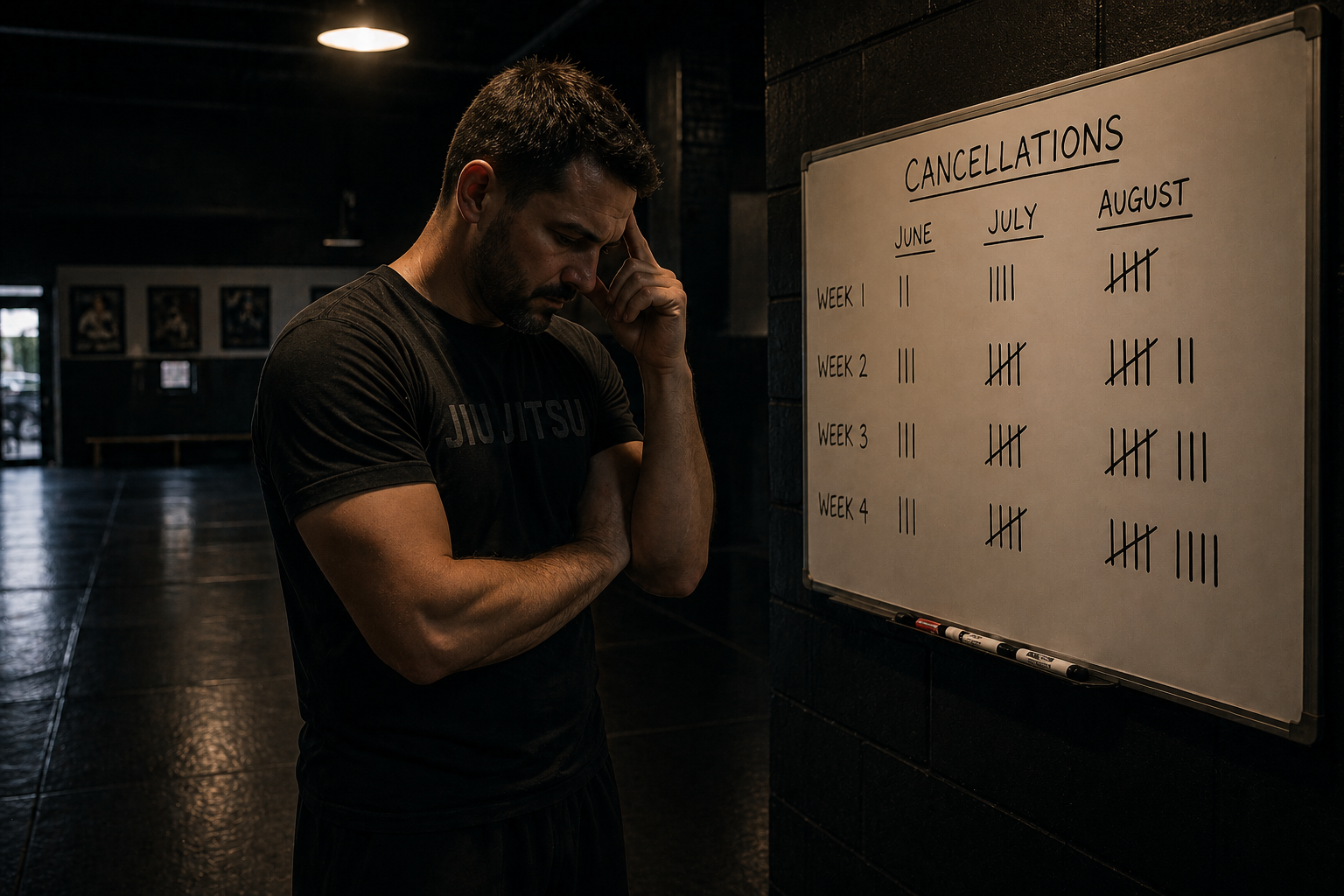
The 6 System Failures That Drive Cancellations
Cancellations don't appear out of nowhere. They follow a chain and at every link in that chain, there's a point where a system should have caught it and didn't.
Here are the six most common system failures that turn summer drift into summer churn.
Failure #1: No One Noticed They Were Gone
The most expensive thing a gym can do is nothing.
A member who trains three times a week misses a session. Then two. Then a full week. Then two weeks. And somewhere in that window, usually around day 14 to 21, they make a quiet, internal decision to stop.
Not a dramatic one. Not an announcement. Just a slow fade.
By the time the owner notices — if they notice at all — the conversation that might have saved that membership is already too late. The member has already emotionally checked out. The cancellation text is just paperwork at that point.
The fix is not being more observant. The fix is a system that observes for you.
Here's the play:
An absence trigger set at 10 days sends an automatic, personal-feeling check-in to any member who breaks their normal attendance pattern. Not a mass email. A targeted message that says: we noticed, we care, here's the door if you want to come back.
That one trigger, set up once, will save more memberships per year than any promotion you run.
Failure #2: Renewals Left to Chance
If your renewal process depends on someone remembering, it's going to fail.
Most gyms handle renewals one of two ways. Either they rely on autopay and assume it will process without issue, or they track renewals manually and catch them when they can.
Both break under summer pressure.
Autopay fails more than gym owners realise. Cards expire. Banks flag recurring charges. Payment methods change after a holiday trip. And when autopay fails silently, and no one catches it for two weeks, a small billing hiccup becomes an awkward conversation, which becomes a reason for a member on the fence to quietly exit.
Manual tracking fails because summer is exactly when the owner's bandwidth is thinnest. Three staff members are sharing vacation time. Class scheduling is messier. Energy is lower. The renewal that should have been flagged on the 12th doesn't get caught until the 26th.
Here's the play:
A 30-day renewal sequence: heads up, value reminder, renewal link, confirmation, personal follow-up if unresolved, removes memory from the equation entirely. Set it once. Every upcoming renewal enters the sequence automatically.
The owner only gets involved at the one moment it matters: the direct conversation when something is genuinely unresolved.
→ This is the core of what Tribe Revenue Team installs: renewal infrastructure that runs without the owner being the trigger.
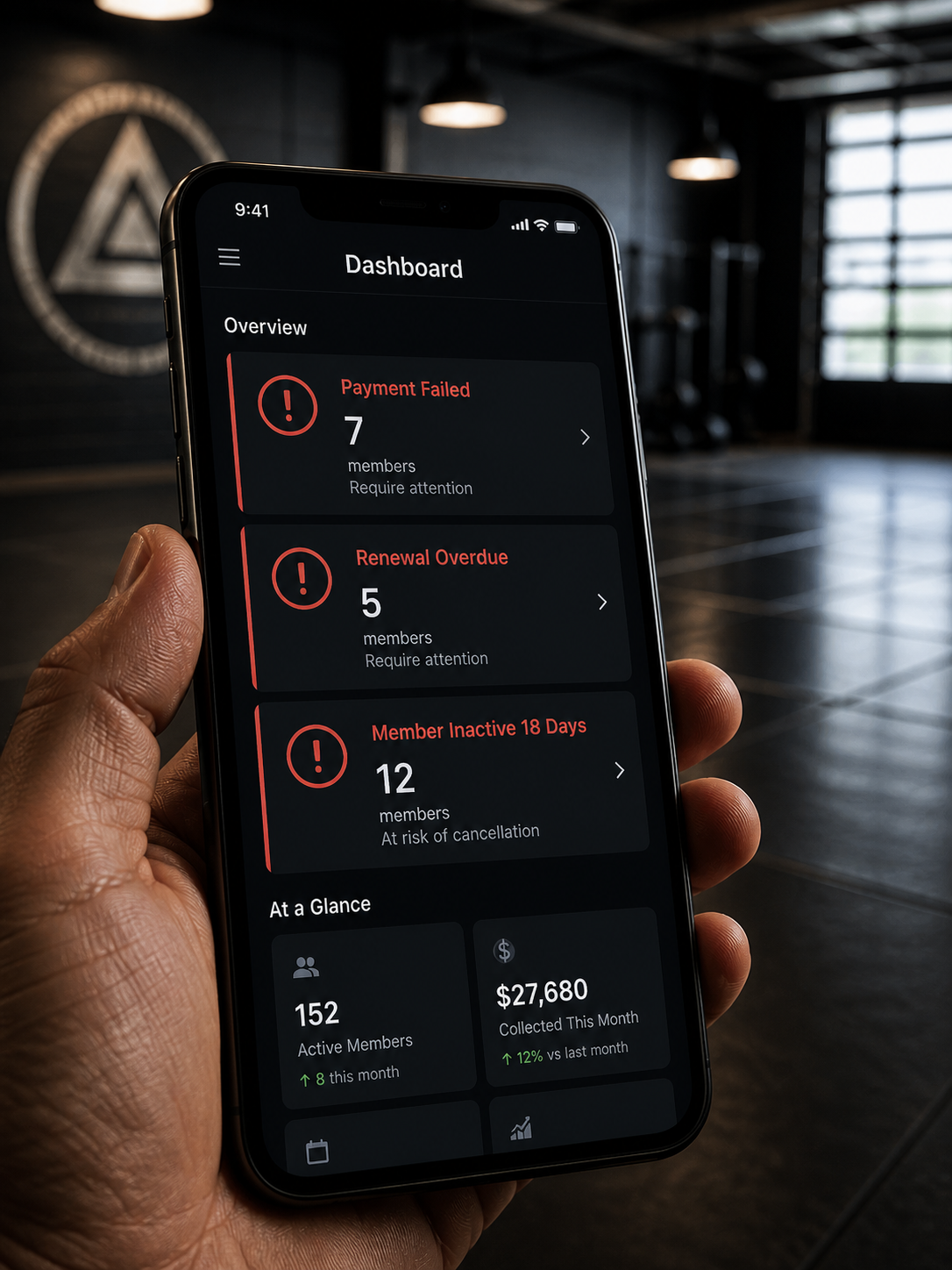
Failure #3: Billing Failures That Sit for Two Weeks
A failed payment is not a cancellation. Ignoring it is.
When a billing failure goes unnoticed, or unaddressed, for more than 48 hours, two things happen. First, the member starts to feel slightly awkward about their status at the gym. Are they still a member? Are they behind? Is someone going to say something?
Second, if they were already considering cancelling and in summer, more members are passively considering it than you realise — the billing ambiguity gives them an easy out. No confrontation needed. Just stop coming.
Most gyms catch billing failures too late because there is no automated alert and no structured response process. The owner sees the failed payment in a report at the end of the week, if they run the report, and then sends a message when they remember.
That window is too long.
Here's the play:
- Within 1 hour of failure: Automated text — friendly, practical, blame-free. "Hey [name] — quick heads up, your payment didn't go through. Probably just a card issue. Here's the link to update your info: [link]. All good."
- Day 2 (if unresolved): Short follow-up. Same tone.
- Day 4: Direct personal outreach from a team member — not automated.
- Day 7: Final notice before access is reviewed.
Most billing failures resolve on day one when the message is immediate, easy, and human in tone. The ones that don't are almost always the ones where a real conversation was needed anyway and now you're having it at day 4, not day 14.
Simple, not easy. But it works every time it runs.
Failure #4: At-Risk Members Get No Special Attention
Not all members carry the same cancellation risk. Most gyms treat them all the same.
Some members are regulars. They show up three times a week, they're progressing, they're invested in the community. Their cancellation risk is low.
Some members are fragile — newer, less consistent, still deciding if this is for them. They train once a week, maybe twice. Summer disrupts their pattern more dramatically. Their risk is high.
A weak system treats both members identically. Same email newsletter. Same check-in cadence. Same renewal process.
A strong system segments them.
Here's the play:
Flag your high-risk members. Anyone training less than twice a week in the previous 30 days, anyone in their first 90 days, anyone who has already had one absence gap this summer. Give them a shorter trigger window. A more personal outreach. A specific offer or reason to come back.
This is not about being clingy. It's about applying the right amount of contact at the right time to the members who actually need it.
Failure #5: No One Is Saying Thank You
Retention is emotional before it's logical. And most gyms are completely ignoring the emotional side.
A member who feels anonymous does not stay loyal under pressure. When the summer routine breaks and they're choosing between driving to the gym or staying home — the deciding factor is often not convenience. It's connection.
Do they feel like the gym would notice if they were gone?
For most members at most gyms, the honest answer is no.
Not because the owner doesn't care. Because there is no system that makes members feel seen at scale. No milestone acknowledgement. No anniversary recognition. No moment where the gym communicates: you specifically matter here.
Steal this:
- 30-day milestone message from the system
- Belt or rank recognition: acknowledged publicly in class and followed up privately
- 6-month membership anniversary: a personal note from the head coach
- 1-year anniversary: recognition, posted (with permission), documented
None of this costs money. All of it costs intention. And the members who receive it stay at dramatically higher rates through seasonal dips because they have a reason beyond habit.

Failure #6: The Owner Is the System
This is the one that breaks everything else.
When the owner is the person responsible for tracking attendance, managing renewals, following up on billing failures, sending re-engagement messages, and recognising member milestones, all of it works exactly as well as the owner's bandwidth allows.
In summer, that bandwidth is at its lowest. Classes are running. Staff are on rotation. Scheduling is messier. The owner is wearing more hats, not fewer.
And that's precisely when members need the most proactive contact.
The owner-as-system model works fine when things are calm. It collapses when pressure increases, which is exactly when retention systems need to be strongest.
Here's the play:
The owner's job in retention is not to be the doer of every task. It's to show up for the conversations that matter — the genuine check-in with a long-term member who seems off, the personal call when a renewal has gone unresolved, the face-to-face moment when a member hits a meaningful milestone.
Everything else should be running without them.
That separation — between the human moments the owner is irreplaceable for and the system tasks that should be automated — is exactly what Tribe Revenue Team is built to create.
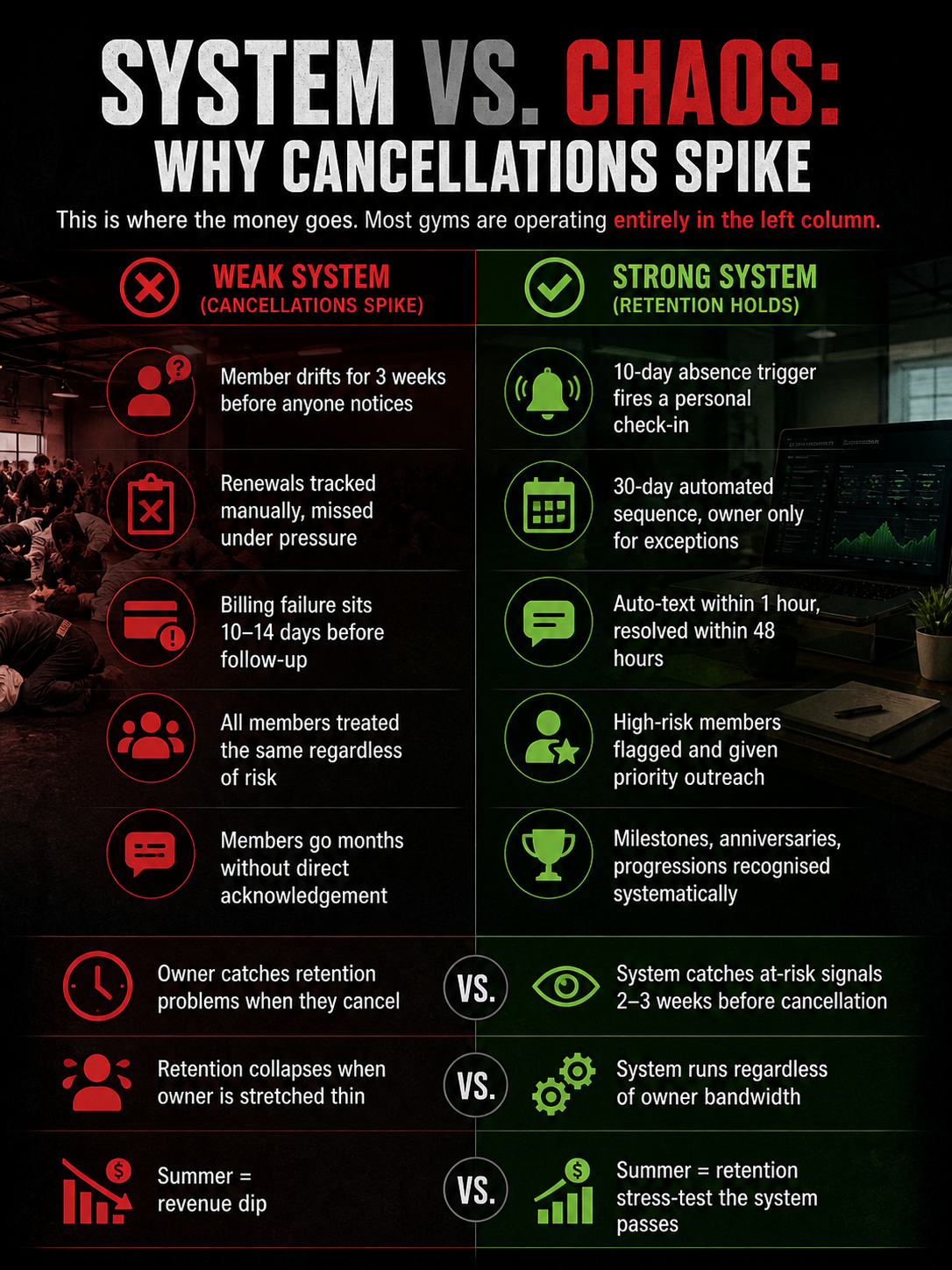
The 4-Step System That Stops the Spike
You do not need to fix everything this week. You need to fix the most expensive failure first.
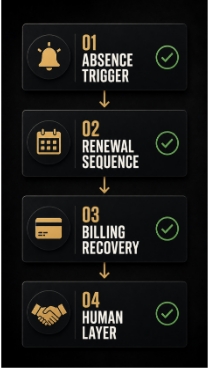
Step 1: Set the absence trigger 10 days for regular members. 7 days for members in their first 90 days. Anyone who hits the threshold gets a check-in. Automated. Personal-feeling. Set once, runs forever.
Step 2: Build the renewal sequence Five messages. -30 days, -14, -7, day of, +3 for unresolved. Written once. Triggered automatically. Owner involved only at the personal follow-up stage.
Step 3: Activate billing failure recovery One-hour auto-text. Day 2 follow-up. Day 4 personal outreach. Day 7 final notice. Friendly tone throughout. Direct payment update link in every message.
Step 4: Add the human layer back in the right places Milestones. Anniversaries. Belt progressions. The moments that make members feel seen. Flag them systematically. Deliver them personally. This is where the owner's time and energy belong, not in chasing payments and tracking spreadsheets.
Run this for one full summer. You will not have the same conversation about July in 2027.
FAQ: Martial Arts Gym Cancellations, Churn, and Retention Systems
Why do martial arts gym cancellations increase in summer?
Summer disrupts the routines members rely on to keep training consistently. School schedules change, families travel, work patterns shift, and the habit that kept a member coming three times a week breaks down. Without a system to catch that drift early — through absence tracking, proactive communication, and re-engagement sequences — gyms lose members they could have saved with a single well-timed message. Summer cancellations are predictable. Gyms with retention systems plan for them. Gyms without them absorb the hit.
What is the most common reason BJJ and MMA members cancel their memberships?
Disconnection — more than cost, scheduling, or injury. Members who feel anonymous, unacknowledged, and replaceable cancel when any disruption to their routine gives them an easy reason. The members who stay through summer, through life changes, and through difficult training periods are almost always the ones who feel genuinely connected to the gym — known by the coaches, recognised for their progress, and aware that someone would notice if they were gone. Systems build that feeling at scale. Without them, it only happens for the members the owner personally has bandwidth for.
How do I reduce cancellations at my martial arts gym without being pushy?
Timing is everything. An outreach at day 10 of unexpected absence feels caring. The same outreach at day 30 feels desperate. A renewal communication 30 days before expiry feels professional. The same message the day after expiry feels like a collections call. Build your retention touchpoints to fire early. Before the member has mentally moved on and keep the tone helpful, not transactional. You're not chasing. You're checking in. Members who feel that distinction respond to it.
What happens to gym revenue when cancellations spike in summer?
The impact compounds. Direct revenue drops as paying members leave. Reacquisition costs increase in September when the gym tries to rebuild. The owner's time shifts from growth to damage control. And the members who stay notice the emptier mats, which subtly undermines the community feel that keeps everyone else retained. A 10–15% summer churn rate at a gym with 80 members and $150 average membership value costs $1,200–$1,800 per month in direct lost revenue, not counting reacquisition spend. Systems that prevent even half that churn pay for themselves quickly.
How early should a gym start re-engaging at-risk members before they cancel?
Day 10 of unexpected absence is the ideal first trigger point for a regular member. By day 21, many members have already made an internal decision to stop. They simply haven't sent the cancellation text yet. The window between day 10 and day 21 is where proactive outreach has the highest conversion rate. After day 30, recovery is possible but significantly harder. Most successful re-engagement happens in that 10-to-21-day window, which is why the absence trigger has to be automated — waiting until you notice manually is usually waiting too long.
Can a martial arts gym owner build a retention system without outside help?
Yes. The core components are buildable with most gym management platforms and a decent CRM. The absence trigger, renewal sequence, billing recovery flow, and milestone messages can all be set up manually. The challenge is time and consistency. Building the system takes a few hours of focused work. Maintaining it, refining messages, monitoring results, and adding new sequences over time requires ongoing attention. Many owners start by building it themselves, then hand it off to a team or service like TRT when the manual management becomes another item on an already full plate.
What is TRT and how does it help with summer cancellations?
TRT (Tribe Revenue Team) is Combat Business Success's done-for-you retention and revenue consistency system. It installs and runs the absence triggers, renewal sequences, billing recovery flows, at-risk member identification, and milestone recognition processes that prevent summer cancellation spikes. The goal is to remove the owner as the bottleneck in retention — so the system catches at-risk members, handles billing, and keeps communication consistent whether the owner is on the mat, on vacation, or just stretched thin. TRT is built specifically for established martial arts gym owners who have the members but not the infrastructure to keep them.
The Cancellations Were Telling You Something. Now You Know What.
Every spike in cancellations is a system failure wearing a seasonal disguise.
It is not July's fault. It is not your members' fault. It is not because you didn't motivate them hard enough or post enough content or care enough.
It is because there was no system running underneath the relationship and when routines broke, there was nothing to catch the drift.
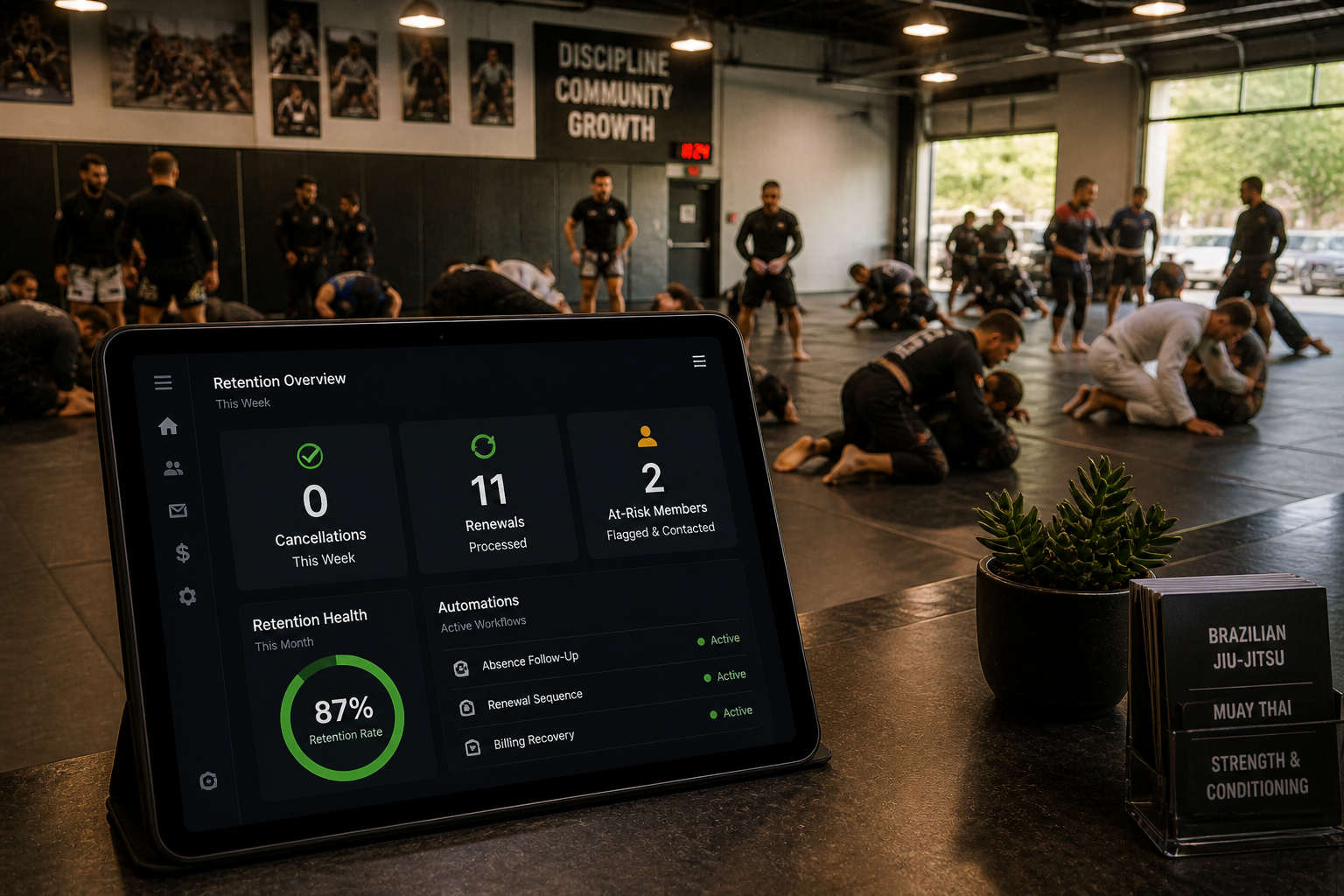
The gyms that hold their revenue through summer are not tougher or luckier. They have absence triggers. Renewal sequences. Billing recovery flows. Member recognition systems. And they have a team or infrastructure running all of it so the owner can do the work they're actually best at.
That is what the Tribe Revenue Team builds for your gym.
Stop absorbing hits that a system would have prevented.
→ Build the Retention System → Tribe Revenue Team
Want the full summer retention playbook?
Read the retention systems blog that ties all of this together, same operator-first approach, start to finish.
